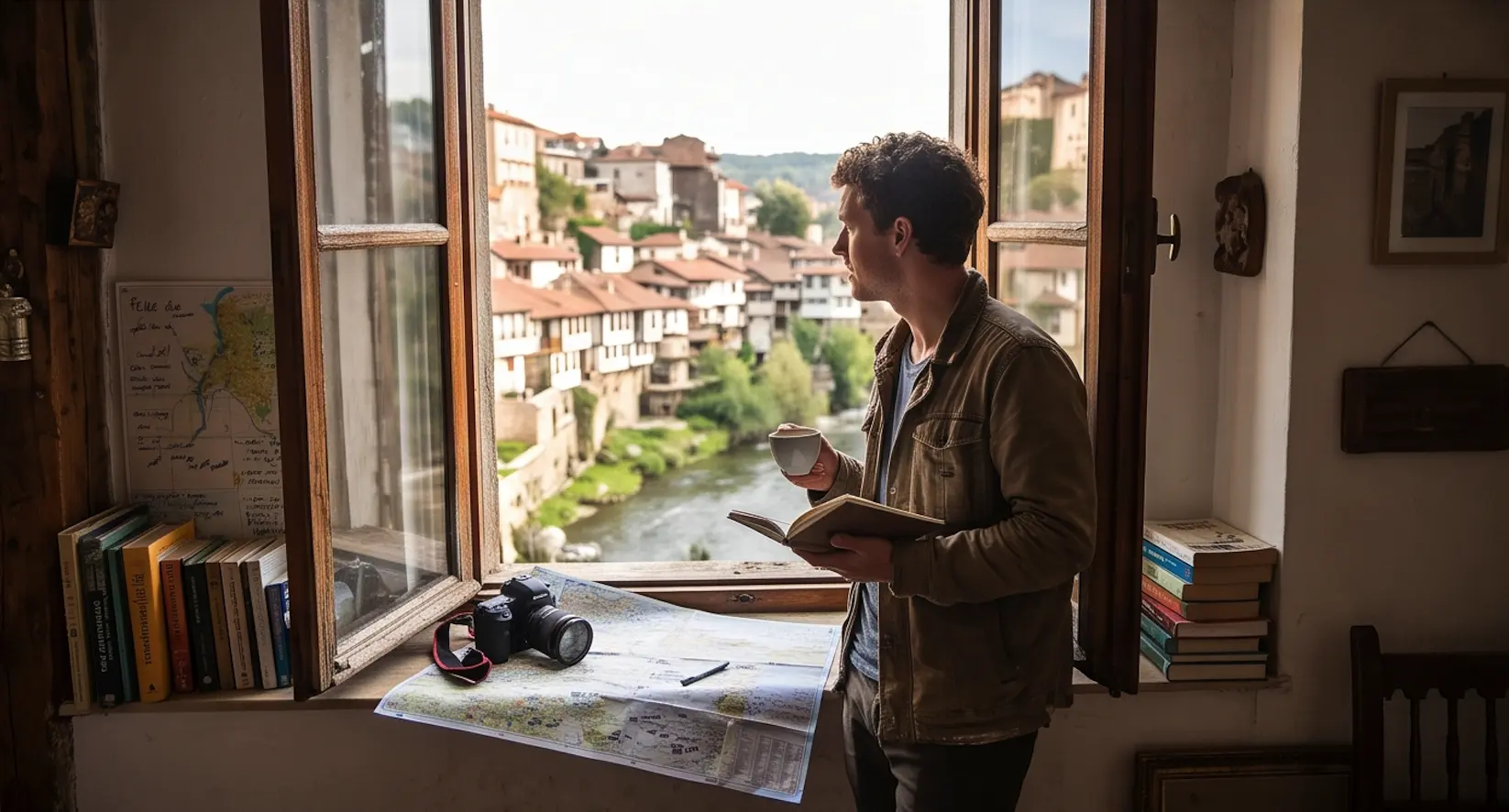
Take a look at any popular travel itinerary for Europe sold by major agencies. It usually looks something like this: Day 1: London. Day 3: Paris. Day 5: Rome. Day 7: Venice. It is a logistical marathon designed to maximize passport stamps and social media photos. We treat travel like a buffet, trying to cram as many famous landmarks onto our plate as possible before the time runs out. But in our rush to see everything, we often end up experiencing nothing.
There is an antidote to this exhausting, superficial way of seeing the world. It’s called Slow Travel, and adopting this philosophy will fundamentally transform the way you interact with new destinations, your budget, and yourself.
What is Slow Travel?
Slow travel is not about the speed of your transportation; you don't have to take a cargo ship across the Atlantic to qualify. Rather, it is a mindset. It is the conscious decision to explore one location deeply rather than skimming the surface of ten different places. It means renting an apartment in a neighborhood instead of a hotel room in the tourist center. It means spending a month in a single region of Italy rather than trying to conquer the entire European continent in a fortnight.
"When you travel fast, you observe a culture. When you travel slow, you participate in it."
The Magic of Routine in a Foreign Place
One of the greatest joys of slow travel is the ability to establish a routine. When you are only in a city for 48 hours, every meal is a high-stakes decision, and every hour must be optimized. It is inherently stressful. When you stay for three weeks, that pressure evaporates.
You find a favorite local bakery where the owner eventually learns your name and your regular coffee order. You figure out the intricacies of the local grocery store. You learn the rhythm of the neighborhood—when the street cleaners come, when the local kids play in the plaza, and when the elderly gather to play cards. You stop being a spectator and briefly become a temporary resident. These mundane moments often become the most cherished memories of a trip.
The Economic Argument
Counter-intuitively, staying longer is often significantly cheaper than moving fast. The biggest expenses in travel are usually transportation (flights, high-speed trains) and short-term accommodation. By slowing down, you drastically cut your transit costs.
Accommodation Arbitrage
Furthermore, platforms like Airbnb and local rental agencies offer substantial discounts—sometimes up to 40% or 50%—for monthly stays compared to nightly rates. By having access to a kitchen, you can cook with fresh ingredients from local markets, saving a fortune on eating out for three meals a day. Slow travel allows you to live a richer lifestyle on a much tighter budget.
Combating Travel Burnout
Museum fatigue is real. Temple fatigue is real. If you try to see a magnificent cathedral every single day for two weeks, by day ten, even the most breathtaking architecture will just look like another pile of old stones. Your brain simply cannot process that much novel stimuli continuously.
Slow travel gives you permission to have a "do nothing" day. It is perfectly acceptable to spend a Tuesday afternoon sitting on a balcony reading a book, or watching the rain fall over a foreign city. You return from your trip actually rested, rather than needing a vacation to recover from your vacation.
The world is too large to see entirely in one lifetime, no matter how fast you run. Stop trying to collect countries. Pick one place, unpack your bags, slow down, and let the destination reveal itself to you.